Why Europe Banned Titanium Dioxide (and the US Didn't)
EFSA couldn't rule out that the white pigment damages DNA. That careful, hedged sentence became a ban in Europe and a shrug in America. Both reactions are defensible.
There’s a sentence buried in a 2021 European Food Safety Authority opinion that, once you understand it, explains the entire transatlantic split over titanium dioxide. EFSA wrote that it “could no longer be considered safe” because the panel “could not rule out a concern for genotoxicity.” (EFSA.)
Read that carefully. EFSA did not say titanium dioxide damages your DNA. It said it could not rule out that it might, and that the data weren’t good enough to set a safe daily dose. In Europe, that hedge was enough to ban the additive. In the United States, the FDA looked at the same evidence and decided the hedge wasn’t enough to act. (FDA.)
Neither agency is being stupid. They’re applying different rules to genuine uncertainty. That’s the whole story, and almost nobody tells it straight. So let me.
What titanium dioxide is and why it’s in food
Titanium dioxide (TiO₂, additive number E171 in Europe) is a brilliant white pigment. It’s the whitest white available in food chemistry, which is why it shows up where manufacturers want opacity or brightness: the white coating on candy, the bright surface of frosting and chewing gum, the gleam in some skim milks and sauces, the shells of coated tablets and supplements. It’s the same compound, in different particle grades, that makes sunscreen and white paint white.
It adds no flavor, no nutrition, no preservation. Like synthetic dye, its only job is to make food look a certain way. That’s worth remembering when we get to the “should you worry” part: there’s no upside to weigh against the uncertainty.
What changed in 2021–2022
For decades, EFSA itself had concluded that E171 didn’t raise a genotoxicity concern. Then in May 2021 it reversed course. The new opinion focused on a feature of titanium dioxide that earlier reviews had underweighted: a meaningful fraction of food-grade E171 consists of nanoparticles small enough that the body may absorb a little and that they could potentially accumulate in tissue. The panel concluded it could not establish a level below which genotoxicity (damage to genetic material) could be ruled out. Without that, it couldn’t set an Acceptable Daily Intake, and without an ADI, it couldn’t certify the additive as safe. (EFSA opinion summary; full opinion, NIH PMC.)
The European Commission acted quickly. Regulation (EU) 2022/63 withdrew the authorization for E171 as a food additive. It entered into force on 7 February 2022, with a six-month grace period; from 7 August 2022, food made or placed on the EU market could no longer contain titanium dioxide. (Food Safety Authority of Ireland.)
So the EU ban is real, recent, and specific to food. (Titanium dioxide remains legal in EU cosmetics and sunscreen: different exposure route, different rules.)
Why the FDA didn’t follow
The FDA reviewed the same EFSA opinion and reached the opposite operational conclusion. The agency’s position is that “the available safety studies do not demonstrate safety concerns” and that titanium dioxide remains permitted as a color additive, capped so that titanium does not exceed 1% of the food’s weight (codified at 21 CFR 73.575). (FDA.) Regulators in the UK, Canada, and Australia/New Zealand reviewed the EFSA opinion and likewise affirmed the additive’s safety, which is worth knowing: this isn’t the US alone against a unanimous world.
In 2023, a coalition including the Environmental Defense Fund and the Center for Science in the Public Interest filed a color additive petition asking the FDA to revoke the listing entirely. (Federal Register.) As of mid-2026 the FDA has taken comments (tens of thousands of them) but has not ruled. For the current legal status in plain terms, see the titanium dioxide ingredient page.
The split comes down to defaults. The EU’s food-additive framework treats unresolved uncertainty as a reason to withdraw authorization: the precautionary posture. The US framework treats an additive as permitted unless harm is affirmatively shown. Same data, opposite presumptions, opposite outcomes. We dig into exactly why those defaults differ in REACH vs TSCA, the deeper structural story underneath every entry on this site.
The Skittles lawsuit, which did not establish anything
In July 2022, a California man sued Mars, alleging Skittles were “unfit for human consumption” because they contained titanium dioxide. The headlines wrote themselves. The case did not. The plaintiff voluntarily dismissed it that fall, “without prejudice,” meaning no court ever evaluated the science. (NPR; Top Class Actions.)
The lawsuit proved nothing legally. But it was a market signal, and Mars eventually responded to it: the company removed titanium dioxide from its US Skittles at the end of 2024, citing consumer sentiment and the EU ban rather than any finding that its candy was unsafe. (ConsumerAffairs.) This is the same pattern you see across the additive world: companies reformulate ahead of regulators because perception, not proof, moves shelves.
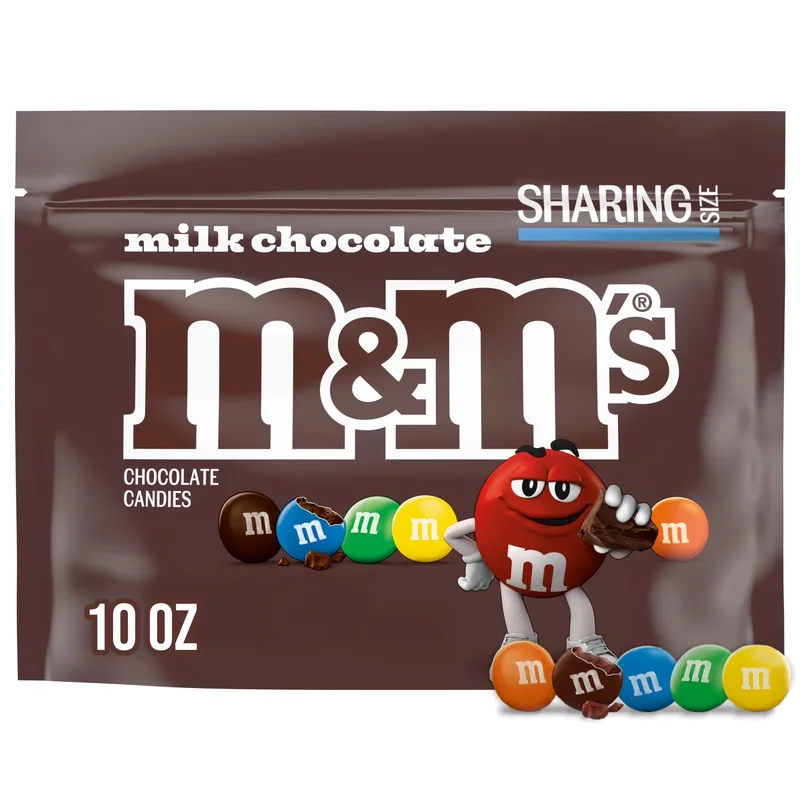
The same candy-shell economics: the US dye mix sits in the EU warning-label regime, and titanium dioxide, the shell whitener, is the additive the EU removed from food in 2022.
The court ruling everyone gets backwards
Here’s where the discourse goes off the rails, and it’s worth slowing down. People often cite an EU court case as proof that titanium dioxide is dangerous. It shows close to the opposite.
That case was about a different regulatory action: a 2019 decision to classify titanium dioxide as a suspected inhalation carcinogen, a hazard label aimed at the powder form workers might breathe, not at eating it. In 2022 the EU’s General Court annulled that classification, finding the Commission had made “manifest errors” and hadn’t adequately demonstrated carcinogenicity. France and the Commission appealed. On 1 August 2025, the Court of Justice of the EU dismissed those appeals, leaving the carcinogen classification permanently annulled. (CIRS Group; Bergeson & Campbell.)
So, to be precise: an EU court ruled that titanium dioxide should not be labeled a carcinogen, and the rat lung-tumor data couldn’t be extrapolated to humans. That ruling concerns inhalation, not eating, and it sits in tension with the food ban: the EU banned E171 from food on genotoxicity-uncertainty grounds while its top court was simultaneously stripping the carcinogen label off the inhaled powder. Both can be true at once because they’re answering different questions under different rules. But if someone tells you “the EU courts confirmed titanium dioxide causes cancer,” they have the story exactly inverted.
So should you avoid it?
Here’s my honest read.
The case against worry: there is no human evidence that dietary titanium dioxide causes cancer or DNA damage at the levels people actually consume. EFSA explicitly did not call it genotoxic; it called the data inconclusive. The FDA, UK, Canadian, and Australian regulators all looked and didn’t act. The EU court of justice rejected the carcinogen classification. The strongest accurate sentence is “we can’t fully rule out a theoretical genotoxic risk from the nanoparticle fraction,” which is a real reason for caution but a long way from “this is poisoning you.”
The case for skipping it anyway: it’s a purely cosmetic additive with zero nutritional benefit, the EU found the safety data inadequate enough to pull authorization, and avoiding it costs you nothing. Many major US products, Skittles among them, have already removed it. If you’d rather not eat an additive that one major regulator couldn’t clear, that’s a perfectly rational, low-cost choice. It’s just a different statement from “it’s been proven dangerous.”
That’s the calibrated position. The EU ban is defensible on precautionary grounds. The FDA’s inaction is defensible on evidentiary grounds. The uncertainty is genuine, and the people insisting they know for certain, in either direction, are the ones to distrust.
The takeaway
“Why did Europe ban titanium dioxide?” Because in 2021 EFSA decided it couldn’t rule out genotoxicity from the nanoparticle fraction and couldn’t set a safe dose, and the EU’s rules treat that uncertainty as grounds to withdraw authorization. The US, working from a “permitted until proven harmful” default, looked at the identical evidence and kept it legal. The Skittles lawsuit proved nothing but pushed Mars to reformulate anyway, and the EU court case people cite as a smoking gun actually removed a carcinogen label. The real story isn’t about a poison. It’s about how two systems handle a genuine “we don’t know yet.”
If you want the broader version of that systems story, Why do I feel better in Europe? is the place to start.