
Why Do I Feel Better in Europe?
A calmly skeptical look at what's actually different about the food, the drugstore, and the way you live there.
The first time it happens, you can blame the wine. The second trip you start to wonder. By the third you’re at dinner somewhere in Europe, jeans noticeably looser than they were ten days ago, telling a friend that something is different about the food here. The bread, you say. The vegetables. You don’t bloat the same way. Your skin looks better. You sleep harder.
You’ve probably had a version of this. The Wall Street Journal has written about it. So has half of TikTok. Americans come back from Lisbon swearing the bread tastes different, from Paris convinced something has happened to their bloating, from a week in Greece looking, by their own report, like a different person.
The standard explanation is that Europe regulates food better. Cleaner ingredients, fewer chemicals, tighter rules. There’s a cultural script that goes: America is poisoning us, Europe has figured it out, and that’s why you feel like a human being again the minute you land in Athens.
The script isn’t wrong, exactly. Real regulatory differences exist, and I’ll get into them in detail. But it isn’t right either. After spending several weeks reading the actual studies and primary regulatory documents, I think the honest answer is more interesting than either side of the internet wants it to be. Some of the chemical stuff is real. Some of it is overhyped. And a lot of what you felt almost certainly wasn’t about the chemicals at all.
Here’s what I found.
The system underneath the symptom
Before getting into specific ingredients, it helps to understand what’s actually different about how the EU and US set up the rules in the first place. The two systems use different default settings, and over decades, the defaults produce different food supplies.
In Europe, the basic principle for chemicals and food additives is that the burden of proof sits with the company selling the product. The flagship law is called REACH, adopted in 2007 and administered out of Helsinki by the European Chemicals Agency. The principle is captured in three words: no data, no market. If you want to sell a chemical in the EU above one tonne per year, you have to file a full safety dossier first. Hazard data. Exposure scenarios. Risk management plan. All of it, before the product hits a shelf.
The American equivalent is TSCA, the Toxic Substances Control Act of 1976. When it passed, the EPA inventoried roughly 62,000 chemicals already in commerce and grandfathered every single one into legal use without a safety review. The original statute set such a high bar for restriction that in 40 years EPA banned or restricted almost nothing. It famously lost in court when it tried to ban asbestos in 1991. The 2016 Lautenberg amendment improved things, but the burden of generating safety data still sits more with the agency than with industry.
The food version of the same problem is called the GRAS loophole, and it’s the part of this story that surprised me most.
GRAS stands for “Generally Recognized as Safe,” and it was created in 1958 to cover obvious ingredients like vinegar and oil. Today it’s the default pathway. Manufacturers can decide on their own that an additive is GRAS, put it in food, and never tell the FDA. The Pew Charitable Trusts estimated in 2013 that of the more than 10,000 additives in the US food supply, about 1,000 entered via self-affirmed GRAS determinations the FDA was never told about, and roughly 3,000 have never been reviewed at all.
When the safety reviews do happen, they aren’t exactly independent. A study in JAMA Internal Medicine analyzed 451 GRAS notifications submitted between 1997 and 2012 and found that not a single one was made by a genuinely independent third party. About 22 percent were determined by an employee of the additive manufacturer. The rest were determined by manufacturer-selected consultants or expert panels. One individual served on 128 of the 290 expert panels they examined.
That’s the system. Now the specifics.
Three places where the gulf is real
Let me give you the three best examples I found, picked for honesty rather than drama.
Potassium bromate. This is the strongest live case. It’s a flour improver used in commercial bread. The EU banned it in 1990. So did the UK, Canada, Brazil, Peru, Nigeria, South Korea, Sri Lanka, and Argentina. IARC, the cancer arm of the WHO, classifies it as possibly carcinogenic to humans based on reproducible rodent kidney and thyroid tumors. The FDA has urged voluntary discontinuation since 1991 but still permits it in US bread at up to 75 parts per million. The official theory is that potassium bromate converts to harmless bromide during baking. The actual measurements show residual bromate makes it into finished bread. Most large industrial bakers have quietly stopped using it. California passed AB 418 banning it statewide starting January 2027. The federal posture is inertia, not science.
Brominated vegetable oil. Used to keep citrus flavors suspended in soft drinks. The EU never authorized it. In August 2024, after roughly 50 years on US shelves, the FDA finally revoked authorization, citing rodent studies showing bromine bioaccumulation in tissue and thyroid effects at realistic exposures. Mountain Dew was already reformulated. Gatorade dropped it in 2013. The FDA was the last to move. The point of including this isn’t to say the system never works. It’s to say that the system does eventually work, sometimes 30 years late.
Formaldehyde-releasing preservatives in shampoo. This one isn’t on most “banned in Europe” lists, and it should be. Free formaldehyde has been prohibited in EU cosmetics for years. Formaldehyde-releasing preservatives like DMDM hydantoin are allowed only under strict concentration caps. In 2022 the EU tightened the labeling threshold from 500 ppm to 10 ppm. The US has been working on the same restriction. The American rule was finalized in February 2025 and doesn’t take effect until January 2027. At the time I’m writing this, DMDM hydantoin is still in plenty of US shampoos with no labeling threshold and no concentration cap. That’s roughly a 25-year regulatory lag for one shampoo preservative.
What the internet has wrong
Now the harder section. If I’m going to ask you to trust me on potassium bromate, I have to be willing to push back where the conventional wisdom doesn’t hold. There are three big ones.
Red Dye 3 is overhyped, even though the ban was right. The FDA finally banned it in food in January 2025, and the discourse made it sound like a 30-year poisoning had finally been stopped. Look closer. The EU never actually banned erythrosine outright. It’s still authorized in Europe as E127, restricted to cocktail cherries and candied cherries. The pivotal toxicology was a 1987 rat study showing thyroid tumors via a rat-specific mechanism. Rodent thyroids are much more sensitive than human thyroids to that specific type of hormonal disruption. There’s no real human signal. The FDA acted under the Delaney Clause, a technicality that requires removal of additives shown to cause cancer in any species at any dose. Still a fine reason to skip synthetic dye. But the catastrophic framing doesn’t survive close reading.
Chlorinated chicken is the most-cited example and the most wrong. Almost nobody who repeats this story knows that fewer than 5 percent of US poultry plants still use chlorine washes. The dominant antimicrobial today is peracetic acid, which is basically vinegar and hydrogen peroxide. And here’s the part that really matters: EFSA, the European food safety regulator, concluded in 2005 that the antimicrobial washes themselves pose no safety concern at the concentrations used. The chemical residue isn’t the problem. The real EU objection is structural. Europe regulates pathogen levels throughout the production chain. Vaccination of flocks. Feed additives. In-life biosecurity. The US relies on the end-of-line wash to clean up what should have been prevented upstream. The EU system is probably structurally better. The chlorine isn’t what makes American chicken dangerous, because for most consumers, it actually isn’t.
“European food is healthier” is mostly about southern Europe. Americans get about 55 percent of their calories from ultra-processed food, per the most recent CDC data. The UK is comparable at around 50 percent. The headline gap is really about Italy, Portugal, and parts of France. A 22-country EFSA analysis found Italy and Portugal sitting in the 10 to 14 percent range, while Germany hits 46 percent and the UK isn’t far behind. If your trip was to Bologna and you tell yourself the EU additive rules fixed your bloating, the more likely explanation is that you ate handmade pasta instead of Goldfish.
What probably actually explains it
This is where the science gets cleaner, and where I think most of the “feel better” effect actually lives.
In 2019, Kevin Hall and his team at the NIH ran the most carefully designed nutrition study of the last decade. Twenty adults moved into a metabolic ward and were fed ad libitum from either an ultra-processed diet or an unprocessed one for two weeks each, with crossover. The meals were matched for calories presented, energy density, macronutrients, sugar, sodium, and fiber. The only thing that varied was processing.
On the ultra-processed diet, people ate about 500 calories more per day and gained roughly two pounds in two weeks. On the unprocessed diet they lost about two pounds. They also ate the processed food about 17 calories per minute faster. Not because they were hungrier. Because something about the way ultra-processed food is engineered makes you eat more of it without noticing.
It’s a small study. It’s two weeks. But it’s the cleanest experimental evidence we have that food composition itself drives intake, independent of any specific banned ingredient. If you spent ten days in Tuscany not eating Lunchables, that alone could plausibly explain a meaningful share of how you felt.
Portion sizes are the other big one. The Barbara Rolls lab at Penn State has run dozens of experiments showing that doubling a portion increases consumption at that meal by about 30 percent, and people don’t compensate later by eating less. American restaurant portions started growing in the 1970s. French fries, burgers, and soft drinks are now two to five times the size they were in the 1950s. The 1955 McDonald’s fries serving is today’s “Small.” European fast-food portions stayed closer to the original sizes. European medium soda is 330 mL. American medium starts at 500 and goes up from there.
Then there’s the walking. Stanford analyzed accelerometer data from 717,000 people across 111 countries. The US averaged 4,774 daily steps and ranked 30th globally. Most of western Europe walked meaningfully more. The absolute number matters less than what it represents. A built environment that produces daily incidental movement instead of requiring you to schedule it.
And the vacation effect is real but smaller than you’d think. Meta-analyses find consistent improvements in wellbeing on vacation, with effect sizes around 0.25, fading within a week of return. But here’s a data point worth holding onto. Most American vacationers actually gain weight on vacation. If general vacation typically causes weight gain, the fact that Americans frequently lose weight on European trips specifically points to something about Europe, not vacation as such. The food environment. The walking. The portions.
One more thing, in the other direction
I want to close on a case where the EU is the less cautious regulator, not the more cautious one. Because this piece doesn’t work if you only hear me when I’m being pro-Europe.
European sunscreens are better than American ones, and not by a little. The EU has approved more than 30 UV filters. The US has about 16. European formulations include modern UVA filters like Tinosorb S, Tinosorb M, and Uvinul A Plus that have been used safely in Europe for decades and aren’t FDA-approved here. A comparative study found US sunscreens allow about three times more UVA penetration than European ones.
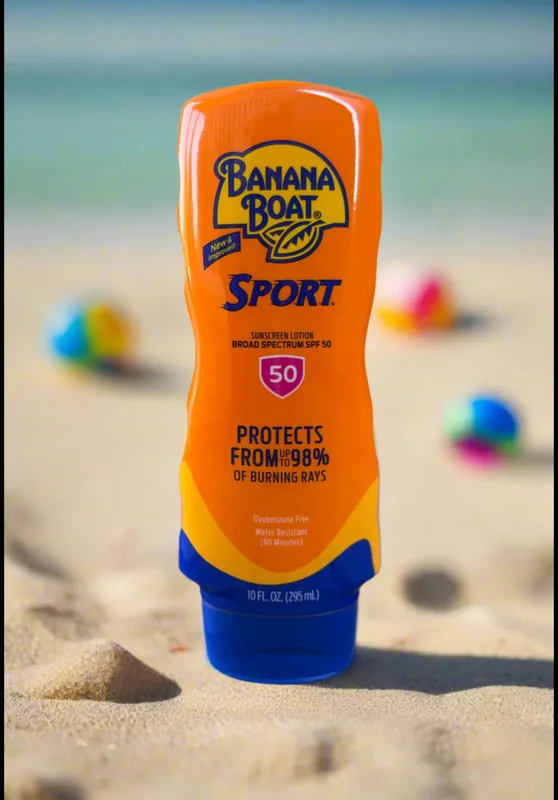
The US bottle: homosalate at 15% body-wide, where the EU has limited it to face products at 7.34% since 2022. Octocrylene is permitted at 10% in both markets.
The cause is structural. The FDA classifies UV filters as over-the-counter drugs requiring full safety and efficacy dossiers, not as cosmetic ingredients. No new active sunscreen ingredient has been FDA-approved since 1999. So Americans get worse skin cancer prevention, not because Europeans accept higher risk, but because the EU regulatory system actually moves. The same system that’s better at restricting questionable ingredients is also better at approving good ones.
So what do you do with this
The “feel better in Europe” effect is real. The most defensible reading is that you ate less ultra-processed food, walked more, slept more, and ate smaller portions, in that order. The regulatory differences matter, but at the level of system, not individual symptom. The GRAS loophole is real. The cosmetics gulf is real. Potassium bromate is real. Most of what you felt on your trip probably wasn’t traceable to any of them.
The useful takeaway, if you want to bring some of how you felt in Lisbon home with you, isn’t to memorize a list of banned ingredients. It’s to act on what the evidence actually supports. Less ultra-processed food. Smaller portions. Walking instead of driving when you can. Time at the table with other people. Reading labels on the small number of additives where the science genuinely warrants concern.
You can do those things here. You’re going to have to. The FDA isn’t coming to save you, and neither am I.